Home>SEO>SEO and ChatGPT – can AI content generation affect positioning?
12-02-2025
You can read this text in 7 minutes
SEO
SEO and ChatGPT – can AI content generation affect positioning?
Jakub Bogusz
Modern AI-based tools like ChatGPT are increasingly being used in marketing. They allow for the rapid creation of blog posts, product descriptions, and social media content. However, the question arises: how do Google and other search engines treat automatically generated texts? In this article, we'll explore the challenges and opportunities of AI-based content generation in the context of SEO.
One of the main advantages of artificial intelligence is the ability to generate large amounts of text in a short period of time. ChatGPT can help create regularly published articles, which is important for Google, as the search engine values sites that frequently update their content.
Inspiration in research
AI is also useful for preliminary information research and article outlining. Marketers can gather content ideas and keywords more quickly than manually searching through multiple sources.
Adapting your writing style
Modern language models can adapt to the style and tone of your message, allowing you to create content that aligns with your brand image and appeals to readers.
Concerns about automatically generated content
Repetition and low originality
AI algorithms learn from existing content, which can lead to the generation of similar threads and wording. Failure to verify your content risks publishing a less-than-unique article, which is detrimental to SEO.
Risk of errors and inaccuracies
Despite advances in language models, ChatGPT can generate information that is outdated, inaccurate, or even completely fictitious. Without human oversight and proofreading, there’s a risk of publishing inaccurate content, which can damage a brand’s image.
Negative perception by Google algorithms
Google has repeatedly emphasized its value for unique, high-quality content written with users in mind. Automated mass-produced content can be perceived as “spam” unless it clearly adds value.
Can Google recognize AI-generated text?
While Google doesn’t disclose the exact details of its algorithms, it’s likely capable of recognizing certain patterns inherent in texts generated by its language models. However, this doesn’t mean that every article generated by ChatGPT will automatically be downgraded.
Of key importance are:
Quality and originality
Consistent with user intentions
No glaring factual errors
If AI-generated content is valuable and carefully verified, Google algorithms may rate it as highly as texts created entirely by humans.
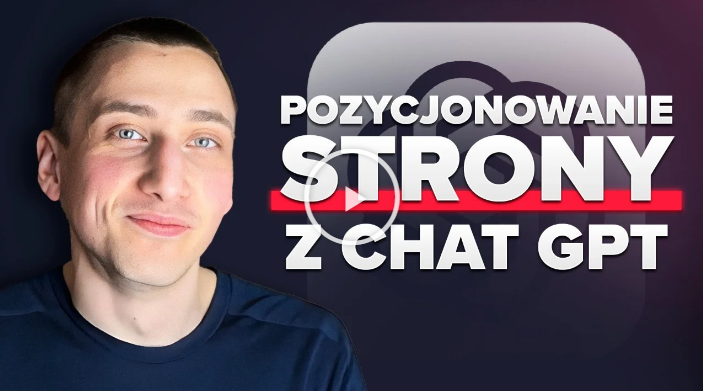
🎥 ChatGPT is a great support tool, but it can't do all the work on its own. Find out why! [CLICK ON THE VIDEO]
How to create valuable content using AI?
Fact Checking After ChatGPT generates your text, always verify the data and information it contains. Supplement it with statistics from reliable sources or examples that will enrich the article.
Personalization and Adding an Expert Voice The AI text can serve as a foundation, but add the finishing touches yourself. Add authentic conclusions, comments, and observations. Show that the text is driven by a human, not just an algorithm.
Using the Right Keywords When planning your AI content, you can suggest keywords. However, remember not to overdo them. Clear and natural language is more important than keyword stuffing.
Unique Formats and Visual Elements Supplement your article with photos, infographics, or videos. These elements will not only diversify the content but also increase its value in the eyes of users (and indirectly, Google).
SEO best Practices when using AI content
Focus on quality over quantity: It’s better to publish less frequent, but valuable articles than to spam with questionable quality.
Maintain originality: Ensure that the generated text doesn’t duplicate existing content online. Even if ChatGPT can transform content, there may be fragments that are similar to other publications.
Add authorship: If you’re combining AI and human work, consider indicating who created the article (and how). Transparency builds trust and helps avoid industry controversy.
Regularly update and improve: AI-generated content may require revisions later, especially if facts or statistics change. Content updates have a positive impact on SEO.
❗ Worth remembering!
The key is to ensure originality, timeliness, and substantive value. AI can support the creative process, but it’s still up to humans to give the texts their unique character and verify their quality. If you address all these elements, AI-generated content can deliver positive SEO benefits and reader satisfaction at the same time.
Can AI-generated content help with SEO? Yes, if we treat tools like ChatGPT as a support, not a substitute for humans. Google is increasingly recognizing low-quality automated content. On the other hand, intelligently prepared and verified content using AI doesn't necessarily have to be treated any worse than content written solely by human copywriters.
Meet Przemek, our SEO specialist, who is not only a master of optimization but also a true board game enthusiast! When he’s not analyzing search results and planning SEO strategies, Przemek dives into the world of board games. He creates his own projects, experimenting with new mechanics, which helps him develop creativity and analytical thinking—skills essential for his daily work. He especially enjoys the worker placement mechanic.
In his free time, he loves revisiting classic computer games like Gothic and the iconic Heroes III and IV series. These games, full of tactical challenges and nostalgia, give him a bit of relaxation and inspiration for his work—both in board game projects and in the SEO world.
Thanks to his passion for games and his love of strategy analysis, Przemek always finds a way to optimize your website, just as he carefully plans his moves in his favorite games.
During breaks from work and designing, he also enjoys picking up a good book. Currently, he’s immersing himself in J.R.R. Tolkien’s “The Lord of the Rings,” which perfectly complements his love for epic stories and well-crafted worlds.










 My account